5 Carrier Red Flags Every Truck Dispatcher Should Watch For
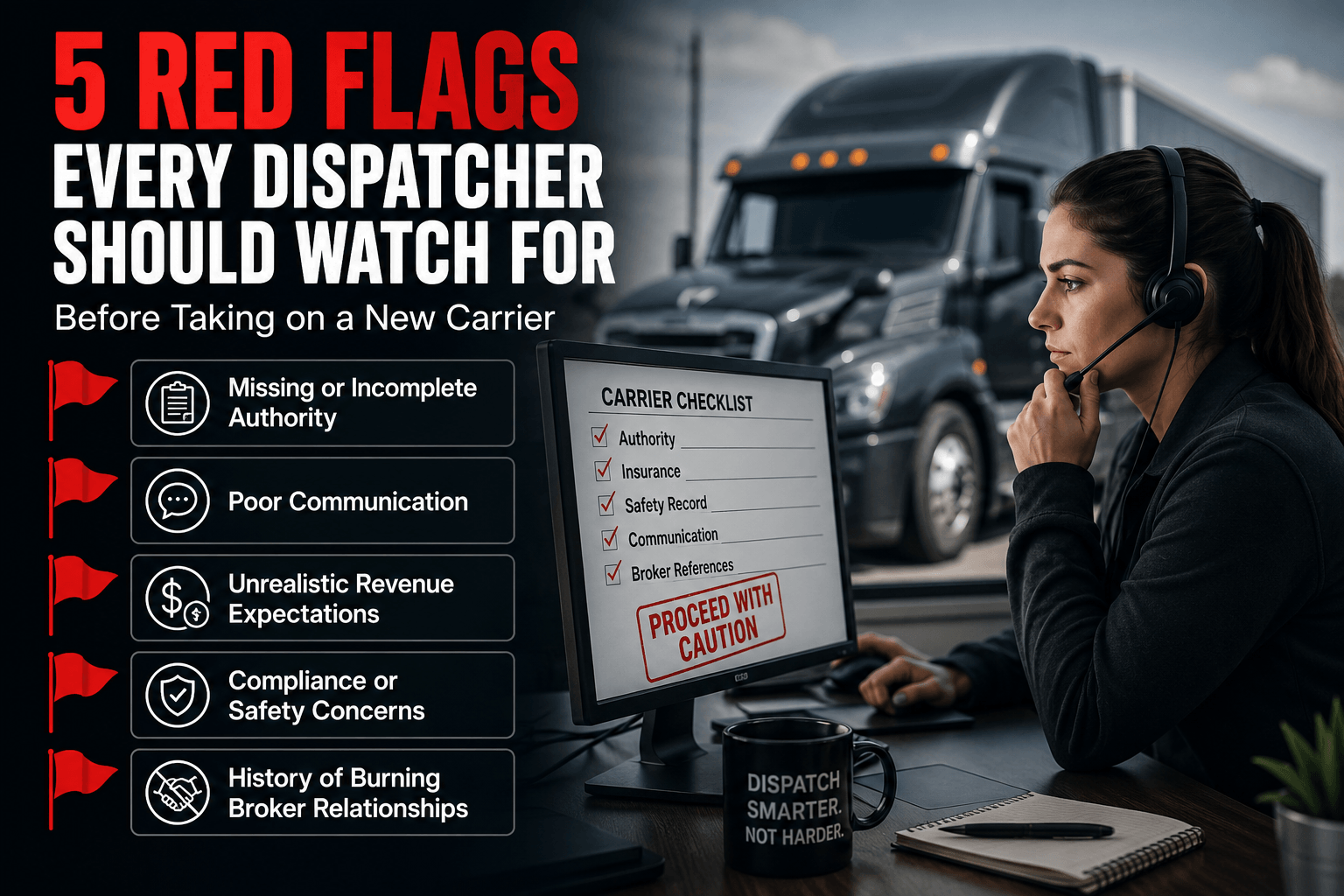
Finding loads is only half of a dispatcher's job. The carriers you choose to represent have a direct impact on your reputation, your relationships with brokers, and ultimately your income. While every trucking company deserves a fair opportunity, experienced dispatchers know that certain warning signs often lead to missed appointments, unpaid invoices, compliance issues, and damaged broker relationships.
Finding loads is only half of a dispatcher's job. The carriers you choose to represent have a direct impact on your reputation, your relationships with brokers, and ultimately your income. While every trucking company deserves a fair opportunity, experienced dispatchers know that certain warning signs often lead to missed appointments, unpaid invoices, compliance issues, and damaged broker relationships.
Here are five red flags that should make every dispatcher slow down and ask more questions before signing a carrier.
1. Missing or Incomplete Operating Authority
Before agreeing to dispatch any carrier, verify their operating authority.
Look for:
Active FMCSA operating authority
Active USDOT number
Proper insurance coverage
Appropriate cargo insurance limits
Current BOC-3 filing
If any of these items are missing or inactive, you may not be able to book loads, and brokers are unlikely to work with that carrier.
Dispatcher Tip: Always verify authority directly through FMCSA instead of relying solely on documents provided by the carrier.
2. Poor Communication During Onboarding
If communication is difficult before the relationship begins, it rarely improves afterward.
Examples include:
Slow responses
Missing paperwork
Constantly changing information
Ignoring emails or phone calls
Failure to provide requested documents
Dispatching depends on constant communication between dispatchers, brokers, and drivers. A carrier who disappears during onboarding may disappear when a broker needs an update on a shipment.
3. Unrealistic Revenue Expectations
Some new carriers expect every load to pay premium rates regardless of market conditions.
Common warning signs include:
Refusing reasonable market-rate freight
Demotional reactions when presented with current spot rates
Expecting dispatchers to "magically" find high-paying freight every day
Comparing every load to pandemic-era rates
Professional dispatchers work within the current freight market, not the market from several years ago.
A successful partnership requires realistic expectations from both sides.
4. Compliance or Safety Concerns
Safety is one of the biggest factors brokers evaluate before awarding freight.
Watch for carriers who:
Have unresolved safety violations
Ignore Hours of Service requirements
Ask you to help violate regulations
Have repeated inspection problems
Show little concern for compliance
A dispatcher's reputation can quickly suffer if they repeatedly represent carriers with poor safety practices.
5. A History of Burning Broker Relationships
Many experienced dispatchers ask an important question:
"Have brokers refused to work with this carrier before?"
Warning signs include:
Multiple reports of missed appointments
Frequent no-shows
Last-minute cancellations
Detention disputes on nearly every load
Payment disputes caused by preventable mistakes
Complaints about professionalism
One difficult carrier can damage relationships that took years to build.
Good dispatchers protect those relationships just as carefully as they protect their carriers.
Final Thoughts
A dispatcher's success isn't measured only by the number of trucks they manage—it's measured by the quality of the carriers they represent. Taking time to verify authority, evaluate communication, assess compliance, and understand a carrier's professional reputation can help prevent costly problems down the road.
The best dispatcher-carrier relationships are built on professionalism, transparency, realistic expectations, and mutual trust. By recognizing these red flags early, you'll spend less time solving preventable problems and more time helping dependable carriers grow their businesses.
Frequently Asked Questions
What should a dispatcher verify before working with a carrier?
At a minimum, verify the carrier's FMCSA operating authority, USDOT number, insurance, BOC-3 filing, and safety profile. You should also evaluate how responsive they are during onboarding and ensure they have realistic expectations about today's freight market.
Can dispatchers refuse to work with a carrier?
Yes. Independent dispatchers are generally free to choose which carriers they represent. Declining a carrier because of legitimate business concerns—such as compliance issues, poor communication, or a history of operational problems—is a business decision.
Why is communication so important when selecting carriers?
Dispatchers coordinate with brokers, shippers, and drivers throughout the shipping process. Carriers who communicate poorly can increase the likelihood of missed appointments, delays, and strained broker relationships.
How can dispatchers protect their reputation with brokers?
Represent carriers who operate professionally, maintain good safety records, communicate consistently, and deliver freight on time. A dispatcher's reputation is built over many successful shipments but can be harmed quickly by repeatedly representing unreliable carriers.
Frequently Asked Questions
- What should a dispatcher verify before working with a carrier?
- At a minimum, verify the carrier's FMCSA operating authority, USDOT number, insurance, BOC-3 filing, and safety profile. You should also evaluate how responsive they are during onboarding and ensure they have realistic expectations about today's freight market.
- Can dispatchers refuse to work with a carrier?
- Yes. Independent dispatchers are generally free to choose which carriers they represent. Declining a carrier because of legitimate business concerns—such as compliance issues, poor communication, or a history of operational problems—is a business decision.
- Why is communication so important when selecting carriers?
- Dispatchers coordinate with brokers, shippers, and drivers throughout the shipping process. Carriers who communicate poorly can increase the likelihood of missed appointments, delays, and strained broker relationships.
- How can dispatchers protect their reputation with brokers?
- Represent carriers who operate professionally, maintain good safety records, communicate consistently, and deliver freight on time. A dispatcher's reputation is built over many successful shipments but can be harmed quickly by repeatedly representing unreliable carriers.