Blog
The Dispatch Desk
Practical playbooks for independent dispatchers — rates, brokers, paperwork, and growing your desk.
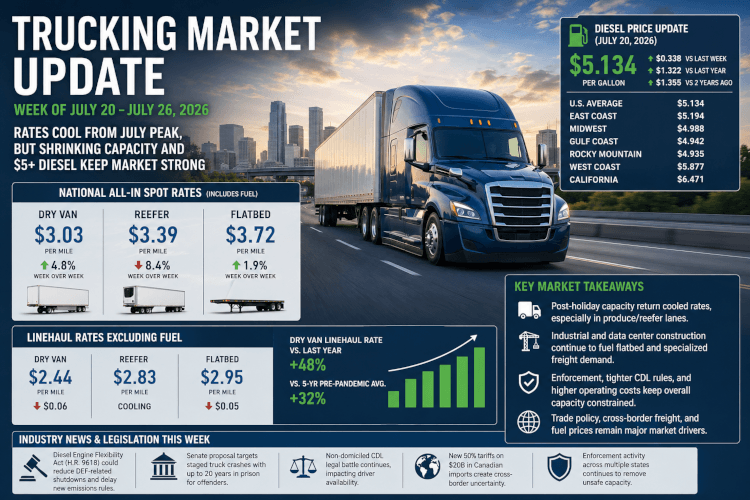
Week in freight for 7/26/2026
The U.S. trucking market entered the final week of July with two competing forces shaping freight prices.
On one side, truckload capacity remains significantly tighter than it was one year ago.

5 Carrier Red Flags Every Truck Dispatcher Should Watch For
Finding loads is only half of a dispatcher's job. The carriers you choose to represent have a direct impact on your reputation, your relationships with brokers, and ultimately your income. While every trucking company deserves a fair opportunity, experienced dispatchers know that certain warning signs often lead to missed appointments, unpaid invoices, compliance issues, and damaged broker relationships.
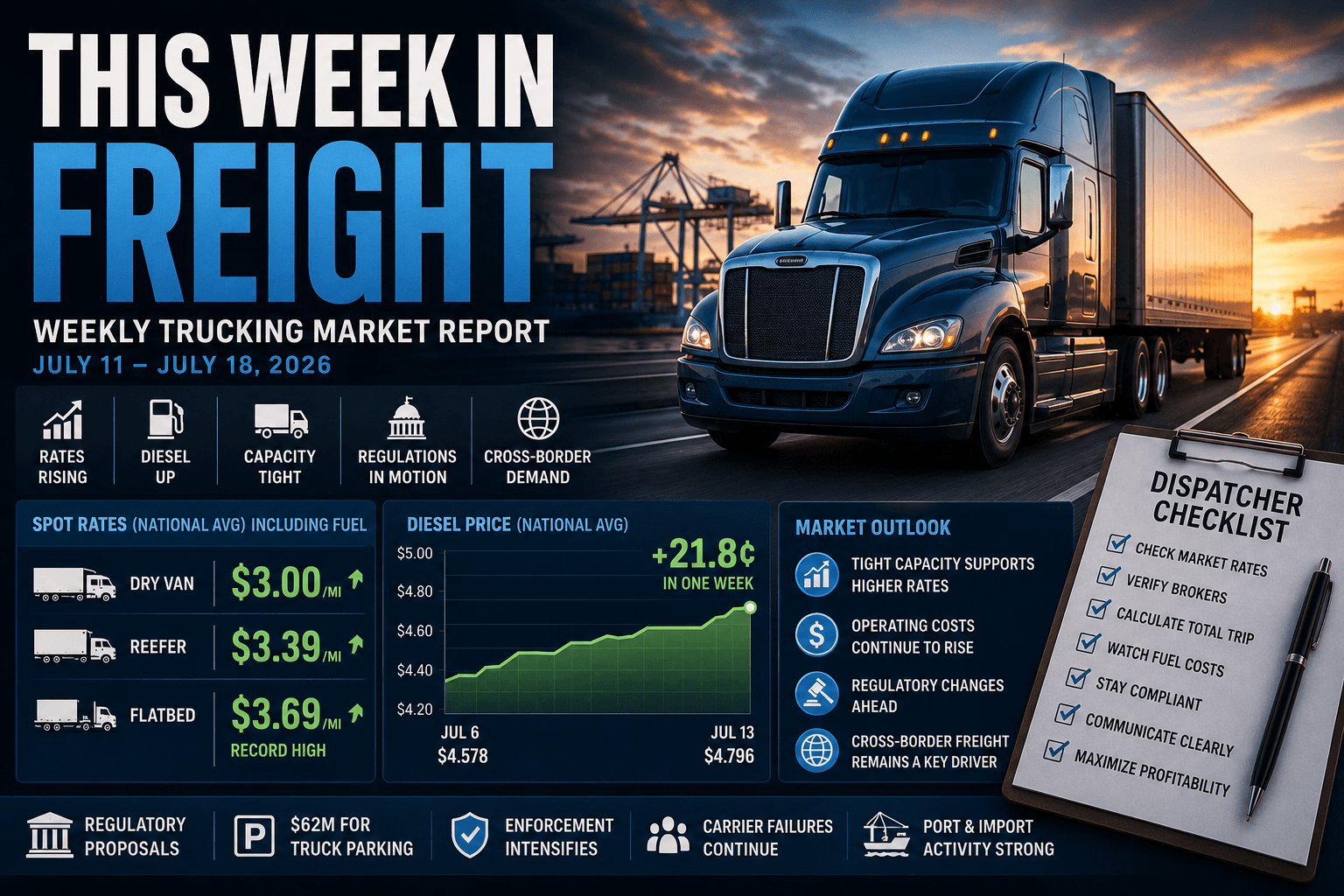
This Week in Freight: Trucking Market Report for July 11–18, 2026
The freight market continued to strengthen this week, but the improvement is not being driven by a broad economic boom.
Instead, the trucking industry is dealing with a combination of tighter capacity, fewer available drivers, rising operating expenses, elevated diesel prices and inconsistent freight demand.

How to Become a Successful Truck Dispatcher: 7 Essential Steps
The trucking industry depends on skilled dispatchers to keep freight moving efficiently. Behind every successful carrier is someone coordinating loads, communicating with drivers, solving problems, negotiating with brokers, and making sure every shipment reaches its destination on time.
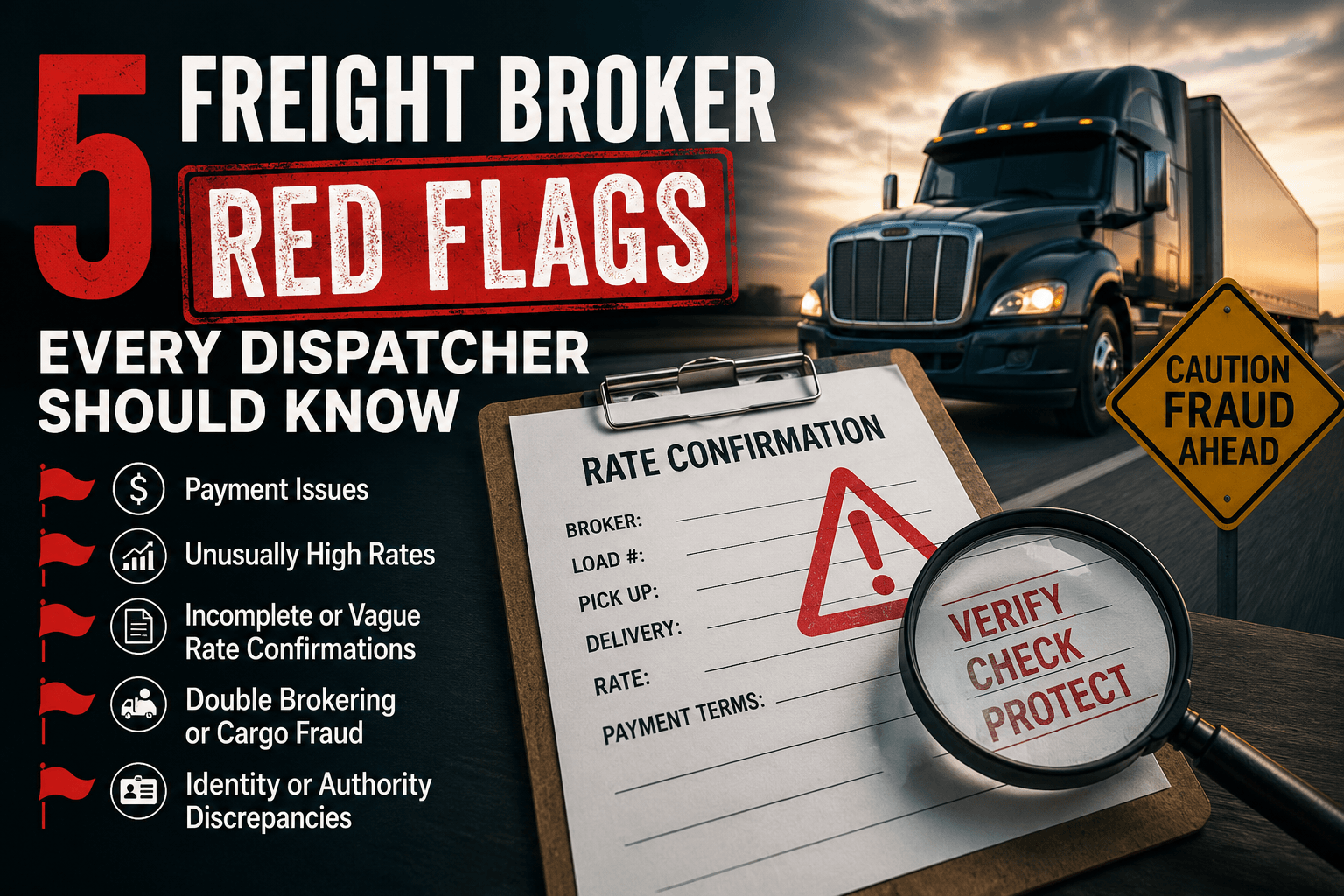
5 Red Flags to Look Out for When Working With a Freight Broker
Freight brokers play an important role in trucking. A reliable broker can help carriers find consistent freight, communicate with shippers, resolve problems and keep trucks moving. However, working with the wrong broker can lead to unpaid invoices, double-brokered loads, cargo theft, detention disputes and serious damage to a carrier’s cash flow.
Broker fraud and identity theft are not hypothetical problems.

How to Save Time Dispatching Trucks: 9 Proven Ways to Cut Hours From Your Day
The biggest time waster in truck dispatching is manual data re-entry — typing the same load details into multiple places: a spreadsheet, a rate confirmation, an invoice, and a text to the driver. Dispatchers who rely on scattered tools often enter the same information four or five times per load. Centralizing load data into one system that feeds every downstream task is the single highest-impact way to save time.

U.S. Freight Market Update: Weekly Trucking News & Freight Outlook – July 11, 2026
Stay up to date with the latest U.S. freight market news for the week ending July 11, 2026. Learn what's happening with freight rates, trucking capacity, fuel prices, equipment demand, and what owner-operators and dispatchers should expect in the weeks ahead.