How to Become a Successful Truck Dispatcher: 7 Essential Steps
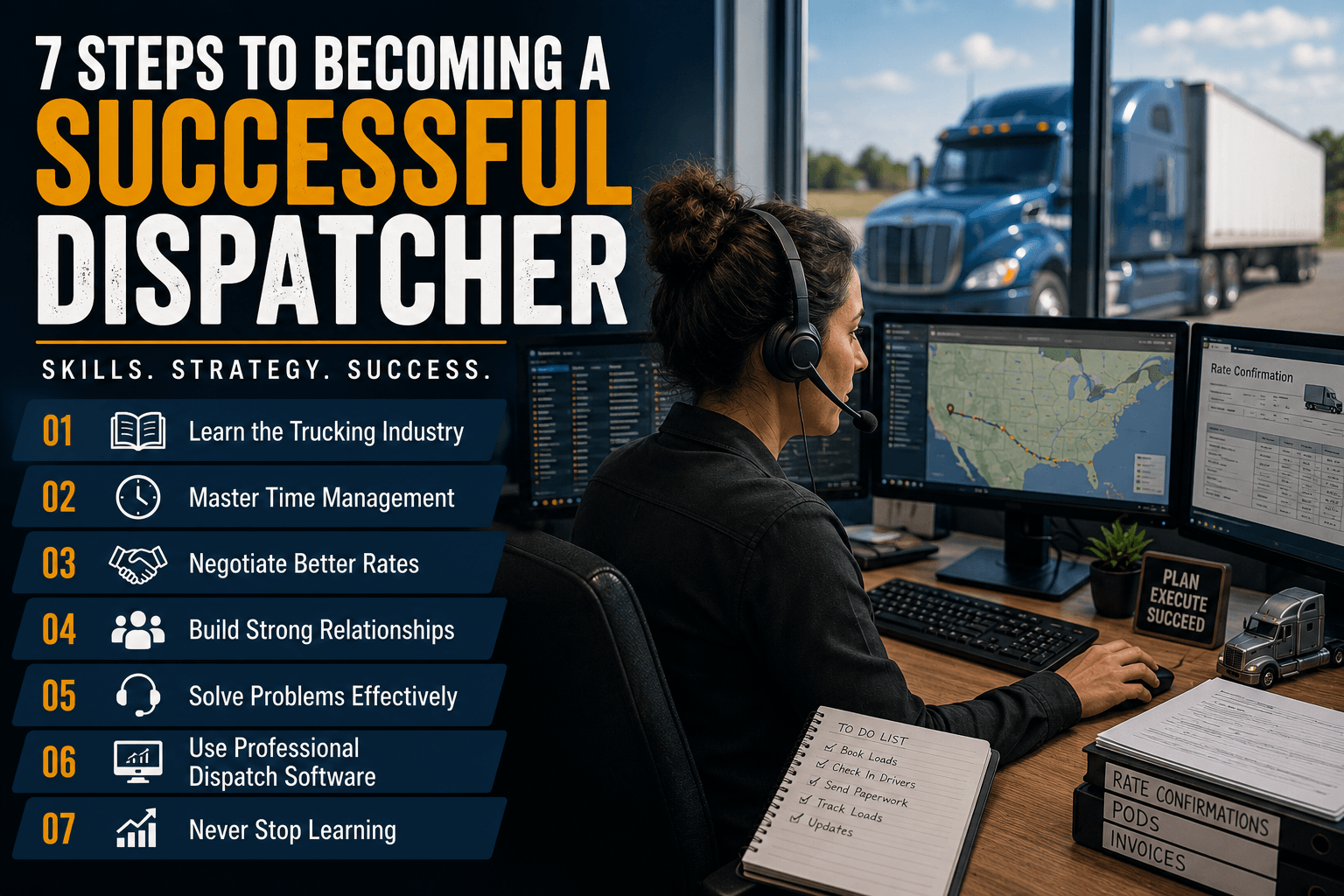
The trucking industry depends on skilled dispatchers to keep freight moving efficiently. Behind every successful carrier is someone coordinating loads, communicating with drivers, solving problems, negotiating with brokers, and making sure every shipment reaches its destination on time.
How to Become a Successful Truck Dispatcher: 7 Essential Steps
The trucking industry depends on skilled dispatchers to keep freight moving efficiently. Behind every successful carrier is someone coordinating loads, communicating with drivers, solving problems, negotiating with brokers, and making sure every shipment reaches its destination on time.
While many people think dispatching is simply booking loads, professional dispatching involves much more. A successful dispatcher understands logistics, builds strong relationships, stays organized, and knows how to maximize profits while minimizing downtime.
Whether you're starting your own dispatch business or working for a carrier, these seven steps will help you build a successful career in truck dispatching.
1. Learn How the Trucking Industry Works
Before you begin dispatching trucks, it's important to understand how freight moves across the country.
Successful dispatchers know the roles of:
Carriers
Freight brokers
Shippers
Receivers
Drivers
Owner-operators
Factoring companies
You'll also need to understand common industry terminology such as:
Rate Confirmation
Bill of Lading (BOL)
Proof of Delivery (POD)
Detention
Layover
Deadhead
Lumper Fees
Accessorial Charges
Reefer
Dry Van
Flatbed
Partial Loads
Full Truckload (FTL)
Less Than Truckload (LTL)
The better you understand how freight moves from pickup to delivery, the better decisions you'll make for your drivers.
2. Master Time Management and Organization
Dispatching is a fast-paced profession where dozens of moving parts must be managed simultaneously.
On any given day you may be:
Booking multiple loads
Tracking drivers
Updating customers
Sending rate confirmations
Managing paperwork
Scheduling appointments
Solving unexpected problems
Without organization, small mistakes can quickly become expensive.
Successful dispatchers rely on systems rather than memory.
They keep detailed records, maintain accurate driver files, track appointments, and stay ahead of deadlines instead of constantly reacting to problems.
3. Learn to Negotiate Better Freight Rates
Negotiation is one of the most valuable skills a dispatcher can develop.
Every extra dollar negotiated on a load goes directly toward improving a carrier's profitability.
Strong negotiators understand:
Current freight market conditions
Fuel costs
Lane pricing
Equipment availability
Driver Hours of Service
Seasonal demand
Deadhead miles
Professional dispatchers don't simply accept the first rate offered.
They know when to negotiate—and when to walk away from a bad load.
4. Build Strong Relationships with Brokers and Carriers
The trucking industry is built on relationships.
Reliable brokers remember dispatchers who communicate professionally, deliver on commitments, and solve problems quickly.
Likewise, drivers appreciate dispatchers who:
Keep them informed
Find profitable freight
Respect their time
Understand their preferences
Help resolve issues
Trust takes time to build but can create long-term opportunities through repeat business and preferred freight.
Professional communication, honesty, and consistency often matter just as much as finding the highest-paying load.
5. Become an Expert at Solving Problems
Every dispatcher encounters unexpected challenges.
Examples include:
Drivers arriving late
Weather delays
Equipment breakdowns
Missed appointments
Load cancellations
Facility congestion
Last-minute schedule changes
The difference between an average dispatcher and a great dispatcher is how they respond.
Rather than panic, experienced dispatchers gather the facts, communicate with everyone involved, develop alternatives, and keep freight moving whenever possible.
Problem-solving is one of the skills that separates professionals from beginners.
6. Use Professional Dispatch Software
Many new dispatchers begin with spreadsheets, notebooks, sticky notes, and whiteboards.
That approach may work for one truck, but it becomes increasingly difficult as your business grows.
Professional dispatch software helps centralize daily operations by allowing dispatchers to manage:
Loads
Drivers
Carriers
Brokers
Documents
Invoices
Settlements
Reporting
Instead of searching through emails and paper files, everything is organized in one place.
Modern dispatch software also reduces repetitive administrative work, helping dispatchers spend more time finding profitable freight and supporting drivers.
As your business grows, having the right software becomes a competitive advantage.
7. Never Stop Learning
The trucking industry changes constantly.
Freight markets fluctuate.
Fuel prices change.
Regulations evolve.
New technology continues to reshape how dispatchers work.
The most successful dispatchers invest in continuous learning by:
Following industry news
Watching freight market trends
Learning new negotiation strategies
Improving communication skills
Studying FMCSA regulations
Using better technology
Learning from experienced dispatchers
Every improvement compounds over time and makes you more valuable to your customers.
Final Thoughts
Successful truck dispatchers aren't simply load bookers—they're logistics professionals who keep trucks moving, maximize revenue, solve problems, and build lasting relationships across the transportation industry.
By understanding how the industry works, staying organized, negotiating confidently, communicating professionally, solving problems quickly, using the right dispatch software, and committing to continuous learning, you'll build a strong foundation for long-term success.
Whether you're dispatching one truck or managing an entire fleet, these seven steps can help you become a dispatcher that drivers trust, brokers respect, and carriers rely on.
Frequently Asked Questions
- Do I need a CDL to become a truck dispatcher?
- No. A Commercial Driver's License (CDL) is not required to work as a truck dispatcher. However, understanding trucking operations, Hours of Service regulations, freight documentation, and industry terminology will help you perform the job more effectively.
- What skills are most important for a truck dispatcher?
- Successful dispatchers need strong communication, organization, problem-solving, negotiation, multitasking, and customer service skills. They also benefit from understanding freight markets and using professional dispatch software.
- Can I start a truck dispatch business from home?
- Yes. Many independent dispatchers operate successful businesses remotely. With a reliable internet connection, phone service, dispatch software, and strong relationships with carriers and brokers, you can manage operations from a home office.
- What software do professional truck dispatchers use?
- Professional dispatchers often use transportation management or dispatch software to organize loads, driver information, broker contacts, documents, invoicing, settlements, and reporting. The right software helps reduce paperwork and improves operational efficiency as a dispatch business grows.