U.S. Freight Market Update: Weekly Trucking News & Freight Outlook – July 11, 2026
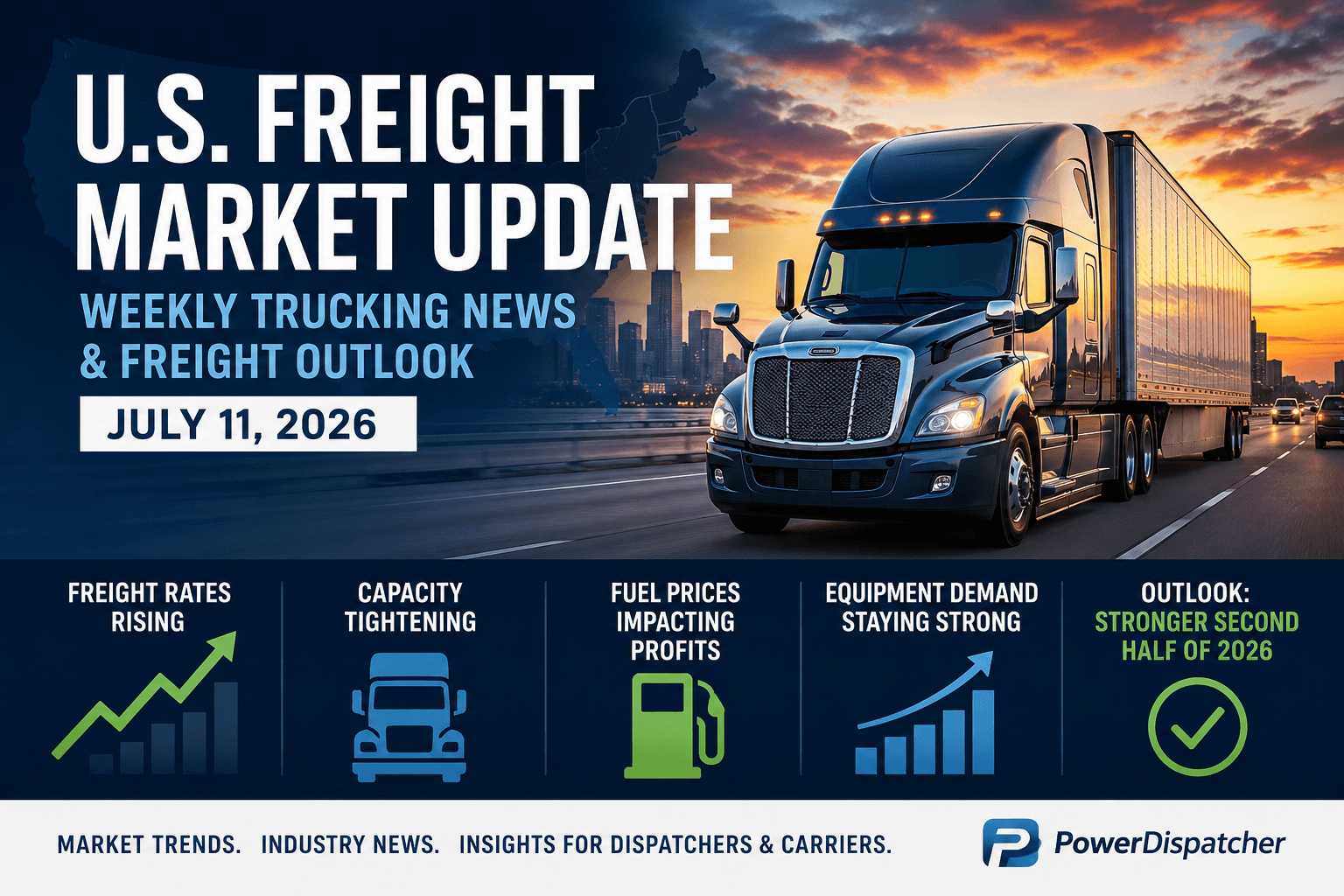
Stay up to date with the latest U.S. freight market news for the week ending July 11, 2026. Learn what's happening with freight rates, trucking capacity, fuel prices, equipment demand, and what owner-operators and dispatchers should expect in the weeks ahead.
U.S. Freight Market Update: Weekly Trucking News & Freight Outlook – July 11, 2026
The U.S. freight market continued its gradual recovery this week as stronger freight demand, tightening truck capacity, and improving spot market rates created more optimism across the trucking industry. While freight is still far from the record highs experienced during the pandemic boom, many carriers and dispatchers are finally seeing conditions move in a positive direction.
Here's everything dispatchers, owner-operators, and trucking companies need to know from the past week.
Freight Rates Continue to Improve
One of the biggest stories this week is the continued strength in truckload pricing.
Industry analysts continue to report that both spot and contract freight rates remain above levels seen throughout much of the previous freight downturn. Capacity continues to tighten as many smaller carriers that struggled during the prolonged freight recession have exited the market, reducing the number of available trucks.
For dispatchers, this means:
Better negotiating power on premium lanes
Fewer trucks competing for quality freight
More opportunities to secure profitable reloads
While not every market is experiencing the same improvement, the overall trend remains favorable compared to last year.
Truck Capacity Remains Tight
Capacity continues to tighten across much of the United States.
Several industry reports indicate that improving freight volumes combined with fewer available trucks are helping push rates higher. This is exactly the type of market shift many carriers have been waiting for after nearly three years of depressed pricing.
Dispatchers should continue focusing on:
Building relationships with quality brokers
Planning reloads before delivery
Avoiding excessive deadhead miles
Monitoring regional market shifts
A disciplined dispatch operation becomes even more valuable as freight competition increases.
Equipment Demand Shows Confidence Returning
Another encouraging sign is the commercial truck market.
ACT Research reports that demand for new Class 8 trucks remains healthy despite higher equipment costs. Improved freight rates and greater regulatory certainty are encouraging fleets to begin investing again.
While many owner-operators remain cautious about purchasing new equipment, larger fleets appear increasingly confident that market conditions will continue improving through the second half of 2026.
Fuel Costs Continue to Affect Profitability
Fuel remains one of the largest operating expenses for trucking companies.
Although freight rates have improved, higher diesel prices continue to reduce margins on many loads. Dispatchers should carefully consider total operating costs—not just the gross rate—when evaluating freight opportunities.
A load paying an above-average rate may still be less profitable after accounting for fuel, tolls, detention, and empty miles.
What Dispatchers Should Focus On This Week
As the market improves, successful dispatchers should continue emphasizing efficiency rather than simply chasing the highest-paying loads.
Key priorities include:
Reducing empty miles
Negotiating detention and layover pay
Booking reloads before delivery
Maintaining strong broker relationships
Tracking market trends by region instead of relying solely on national averages
Small improvements in planning often generate significantly more revenue than simply accepting the highest posted rate.
Industry News Roundup
Several additional developments are worth watching:
Freight analysts continue forecasting a stronger second half of 2026 as capacity remains constrained.
Rising freight rates are beginning to improve financial performance across many publicly traded transportation companies after a lengthy freight recession.
Equipment manufacturers continue reporting healthy order activity as carriers prepare for future growth.
Outlook for the Coming Weeks
Current indicators suggest the freight market remains on a positive trajectory.
While seasonal fluctuations and economic uncertainty always remain factors, most industry analysts agree that today's market is considerably healthier than it was throughout much of 2024 and 2025. Capacity reductions are supporting higher freight rates, and carriers that operate efficiently are beginning to see improved profitability.
For owner-operators, this means continuing to focus on selecting quality freight instead of simply maximizing miles.
For dispatchers, it reinforces the importance of strong planning, proactive communication, and careful load selection.
Final Thoughts
The freight market is showing meaningful signs of recovery. Higher rates, tighter capacity, and improving freight volumes are creating better opportunities for trucking businesses across the country.
Markets will continue changing from week to week, but carriers and dispatchers who stay informed and make data-driven decisions will be in the best position to capitalize on the improving freight environment.
If you're looking to streamline your dispatch operation, organize carrier information, manage documents, invoice customers, and keep your entire operation in one place, PowerDispatcher provides the tools modern dispatchers need to operate more efficiently and grow their business.
Frequently Asked Questions
- Is the U.S. freight market improving in 2026?
- Yes. The U.S. freight market has shown signs of improvement throughout 2026, with stronger freight demand, tighter truck capacity, and gradually increasing spot market rates. While conditions vary by region, many carriers and dispatchers are seeing more opportunities than they did during the freight downturn.
- Why are freight rates increasing?
- Freight rates are rising because truck capacity has tightened while freight demand has improved. Many smaller carriers exited the market during the freight recession, leaving fewer available trucks to haul freight. As demand grows and capacity decreases, brokers are often willing to pay higher rates for available trucks.
- How does tighter truck capacity affect owner-operators?
- Tighter truck capacity generally benefits owner-operators by creating more negotiating power. When fewer trucks are available, carriers may have access to better-paying loads, improved reload opportunities, and stronger relationships with freight brokers looking for reliable capacity.
- What should dispatchers focus on during an improving freight market?
- Dispatchers should focus on minimizing deadhead miles, securing profitable reloads before delivery, negotiating detention and layover pay, maintaining strong broker relationships, and selecting loads based on profitability rather than rate alone. Efficient planning can significantly improve carrier revenue.
- Are diesel fuel prices still affecting trucking profits?
- Yes. Diesel fuel remains one of the largest operating expenses for trucking companies. Even with improving freight rates, fuel costs can significantly reduce profit margins, making careful route planning and load selection more important than ever.
- What is the outlook for the U.S. freight market?
- Industry analysts remain cautiously optimistic that the freight market will continue improving throughout the second half of 2026. Stronger freight demand, tighter capacity, and stabilizing market conditions are expected to support healthier freight rates if economic conditions remain favorable.